|
|||||||||||||||
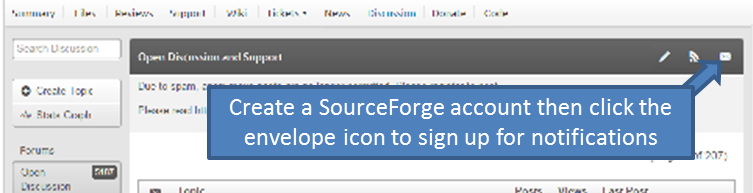
FreeRTOS Support ArchiveThe FreeRTOS support forum is used to obtain active support directly from Real Time Engineers Ltd. In return for using our top quality software and services for free, we request you play fair and do your bit to help others too! Sign up to receive notifications of new support topics then help where you can.
Loading
FreeRTOS tasks can interrupt USB stack implementation?Posted by ddudas on September 24, 2015 Hi all, I'm using ST's CubeMX implementation on a F4 discovery board. I use ST's USB middlewares with FreeRTOS. When I get a special OutputReport from PC side I have to answer nearly immediately (in 10-15 ms). Currently I cannot achieve this timing and it seems my high priority tasks can interrupt the USB callback. What do you think, is it possible? Because it's generated code I'm not sure but can I increase the priority of the USB interrupt (if there is any)? Thank you, David FreeRTOS tasks can interrupt USB stack implementation?Posted by rtel on September 24, 2015 10 to 15 ms is very slow, so I'm sure its possible. Where is the USB callback function called from? If it is an interrupt then it cannot be interrupted by high priority RTOS tasks. Any non interrupt code (whether you are using an RTOS or not) can only run if no interrupts are running. Without knowing the control flow in your application its hard to know what to suggest. How is the OutputReport communicated to you? By an interrupt, a message from another task, or some other way? FreeRTOS tasks can interrupt USB stack implementation?Posted by ddudas on September 24, 2015 The callback which receive the data from PC is called from the OTGFSIRQHandler (it's the part of the HALPCDIRQHandler function). I think the problem is SysTickHandler's priority is higher than OTGFSIRQHandler and it's cannot be modified, but the scheduler shouldn't interrupt the OTGFSIRQHandler with any task handled by the scheduler. Am I wrong that the scheduler can interrupt the OTGFS_IRQHandler? FreeRTOS tasks can interrupt USB stack implementation?Posted by rtel on September 24, 2015 Ulead Cool 3d Production Studio 1.0.1 Portable May 2026Aesthetically, the software excels at a particular look: bold public-facing 3D titles and logo intros—the kind seen in late-90s and early-2000s multimedia projects. The results are inherently stylized: exaggerated bevels, saturated reflections, and pronounced specular highlights. For contemporary projects, that look can be nostalgic and intentional; for others it can be refined by combining subtle bevels, desaturated materials, and restrained lighting. Ulead COOL 3D Production Studio 1.0.1 Portable is a compact, purposeful tool that excels at creating stylized 3D titles quickly. Its strengths are approachable controls, fast previews, and a distinct visual character. By managing assets and performance carefully, using restrained material and lighting choices, and exporting with compositing-friendly formats, users can leverage the software to produce appealing motion-graphics elements that either embrace a nostalgic aesthetic or serve as clean, effective titles in modern workflows. Ulead COOL 3D Production Studio 1.0.1 Portable Ulead COOL 3D Production Studio 1.0.1 Portable is a compact, focused tool that conjures 3D titling and motion-graphics capabilities from an era when consumer desktop multimedia editing was becoming accessible. Stripped of bulky installers and integrated into a portable package, the application presents itself as a small, self-contained creative studio: an interface where textured fonts, beveled shapes, and animated lighting converge to turn plain text and logos into shimmering, dimensional objects. Its vintage charm lies not only in aesthetic outcomes—rounded extrusions, soft lens flares, and glossy chrome effects—but also in the deliberate simplicity of workflow, designed for users who want polished 3D titles without an industrial learning curve. Aesthetically, the software excels at a particular look: The workspace is organized around a stage, timeline, object properties, and a library of materials and presets. The stage acts like a miniature theater: a camera viewpoint frames the composition, lights stage the subject, and a background plate provides context. Objects—text, shapes, and imported bitmaps—can be extruded and manipulated in three axes. A keyframe-based timeline governs motion: position, rotation, bevel depth, and material attributes all animate over time. Preset animations and materials offer immediate, recognizable looks (glass, gold, brushed metal), while sliders and numeric fields let you nudge bevels, specular highlights, and shadow softness for more nuanced control. Ulead COOL 3D Production Studio 1 Technically modest by modern standards, COOL 3D’s rendering pipeline emphasizes speed and interactivity. Preview renders are fast and forgiving, enabling iterative refinement; final renders prioritize quality with configurable antialiasing and shadow settings. Its lighting model is intuitive—directional, point, and ambient lights with falloff options—so believable depth is achievable without mastering photorealistic rendering theory. The portable packaging also makes the program appealing for quick demos, class labs, or artists who need a lightweight tool on USB media. FreeRTOS tasks can interrupt USB stack implementation?Posted by ddudas on September 24, 2015 Thank you for the answer, I think I'm a bit confused with the Cortex ISR priorities :-) What I can observe is if I use a much higher osDelay in my high priority task I can respond for the received USB message much faster. This is why I think tasks can mess up with my OTG interrupt.
Copyright (C) Amazon Web Services, Inc. or its affiliates. All rights reserved.
|
|||||||||||||||




NXP tweet showing LPC5500 (ARMv8-M Cortex-M33) running FreeRTOS.
Meet Richard Barry and learn about running FreeRTOS on RISC-V at FOSDEM 2019
Version 10.1.1 of the FreeRTOS kernel is available for immediate download. MIT licensed.
View a recording of the "OTA Update Security and Reliability" webinar, presented by TI and AWS.
FreeRTOS and other embedded software careers at AWS.